Nara Smith, the Soft Life, and What We Actually Want
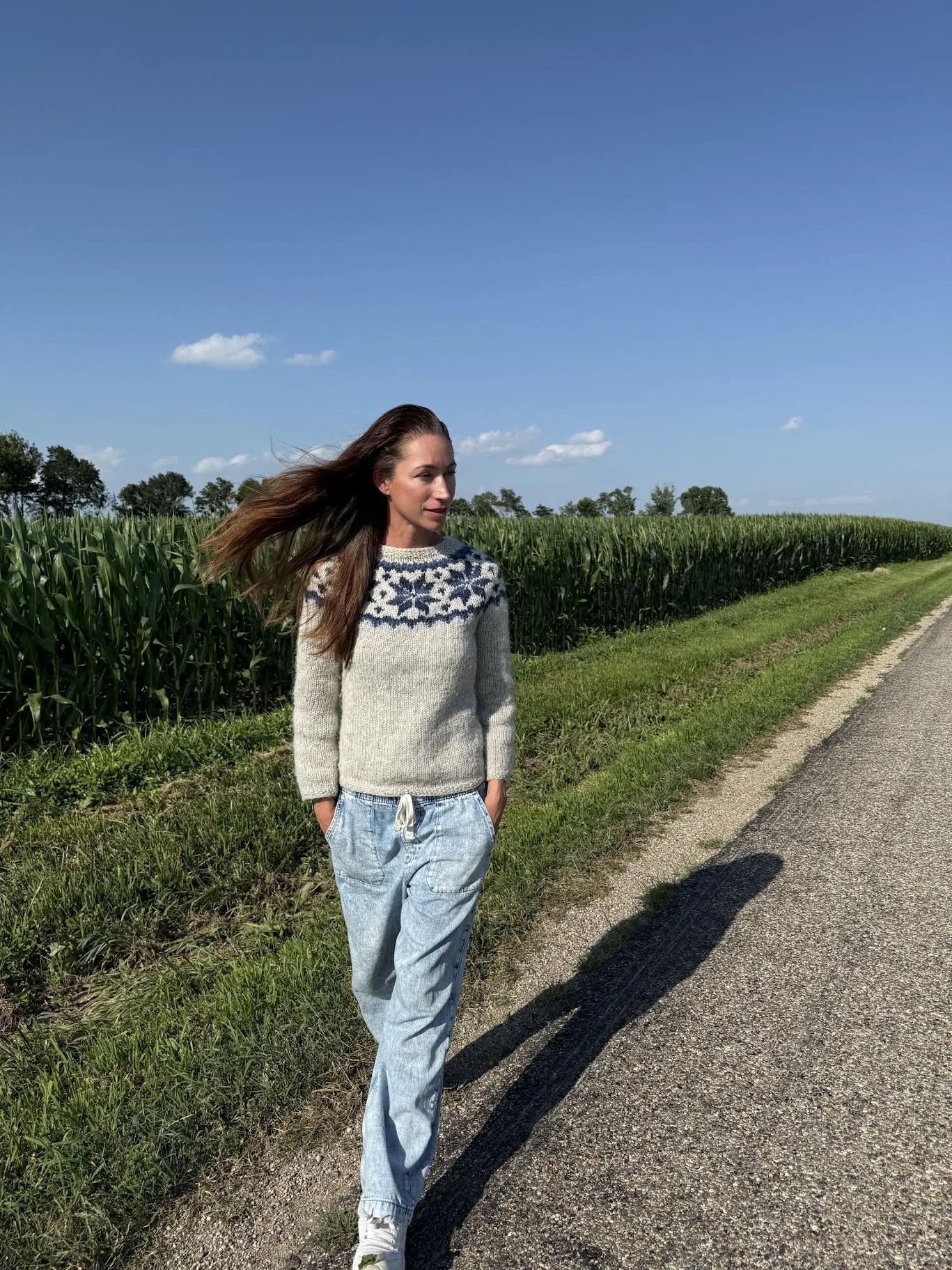
The Soft Life, a feeling we might think we want to have, a life that’s idyllic, with a lack of tension and stress, and full of feminine whimsy.
Living Softly, actively dropping the widely held misconception: the belief that accomplishing our goals requires ongoing stress and struggle.
What we really want is to be able to do hard things without destroying ourselves, dropping No Pain, No Gain, wear whatever we like, express ourselves as who we actually are, and connect with people around how relaxed and energized it feels to be ourselves, whether that is whimsy, messy, or something else entirely. The real aesthetic of softness is to allow yourself to be truly you.
So many of us are interested in achieving more without burning out, but when we see influencers seemingly “doing it all” and looking their version of flawless along the way, it’s an act. The soft life influencers are showing some aspects that are truly compelling, a life of ease, but as we watch, it’s obviously a performance. Is it okay to perform something that preys on people’s emotions, tapping into a very real desire to feel good, calm, and at ease in life?
Even Nara Smith, in her recent Call Her Daddy interview, talked about the gap between what people imagine and what real life is actually like. Of course, she is playing right into it, and that comes with a lot of feelings from those watching or those trying to emulate her. The same goes for her pal Hannah Neeleman, of Ballerina Farm fame. It’s a business with lots and lots of funding and support, but it’s a little tricky to know on first, or even the 10,000th, glance because that kind of accidental patriarchal perfection sucks you in like the Barbie movie, except we’re missing Greta Gerwig writing the script.
A lot of us grew up knowing what was entertainment and what was real life, and the problems with both, in their own ways, not living up to the better way that we are all, in some way, responsible for bringing forward. My family’s story was equal parts The Beverly Hillbillies and Family Ties, both showing interesting and not always fair examples of art reflecting life, but we knew the difference. We were being entertained and asked to think and feel just a bit, and that felt good too.
I was quite a bit younger than Mallory on Family Ties, but when she got a bad-boy boyfriend who wasn’t liked by her family, I did wonder if I should do the same. The bad boy seemed kind of cool, and, funny enough, I did try that out for a while in my early twenties before I started to go deeper with questions like: Who am I? What do I actually want in this life? And, even more exciting to me, what do I want to do with my energy?
And, of course, the real Mallory, Justine Bateman, grew up to be super cool.
My book, Living Softly, is coming out in March, and friends are sending me loads of aesthetic quotes on softness posted by folks with platforms large and small. I know, logically, seeing the words “softness” and “soft life” is probably good for cultural awareness for my book coming in March, but my book will not teach you how to make everything from scratch while holding one of many babies on your hip with perfectly combed hair.
I’m a few decades older than today’s elevated and perfectly shiny 24-year-old influencers, and I’m grateful for that. But I was in my twenties once, too, and I slung my youth for whatever I could get, which I think is fair. I saw things I wanted to change and things I wanted to do something about, and I created a ruckus with early YouTube videos like Yoga for Hangovers, Yoga for Sarah Palin, and Yoga for Better Sex. I cringe a bit at my old self, but that’s okay. I’ve grown, and I’ve shaken out a lot of dogma along the way.
That technicolor Little House on the Prairie aesthetic, as compelling as it is for so many of us, falls more into the category of fantasy than something most of us are actually aiming to recreate. It's a version of reality that's interesting to see and imagine, but it isn't real. I'm in Berlin quite a bit, and it reminds me of an older version of New York City, when things felt even more artsy and wonderfully strange. But I know that's my own imagined version of the city. My New York was the early 2000s, when it still felt wonderfully creative, though even then an artist loft came with a vastly different price tag.
Softness practice has saved me in countless ways, mostly because the definition and practice of softness is to be mobilized, movable so you can be moved by your breath, your ideas, and by others. Softness creates space for your Breath-Body Connection to be in conversation with you, taking you from a rigid fight, flight, freeze, or flop state to one of actually noticing how you feel and, here is the incredible part, responding to what you find with care.
Softness is not a better way that’s up for debate. It is the way that allows more to become possible. You can achieve a lot without softness, with the approach of rigidity, but something, mostly you, will break, and you will feel disconnected along the way.
The coolest thing about softness, for me, is that I didn’t make it up. It’s a wisdom from the healing arts, specifically tai chi, and I have found a lot of support also with shiatsu. The foundations of softness, Mobilize, Breath-Body Connection, Harmonize, and Unweight, contain actions that all of us can practice in our daily moments, whether you know the tai chi sequence or not. The foundations especially work for us to experience when we practice them during our regular moments that are easy, so we have them when we are in the middle of something actually hard.
My favorite result, of which there are endless, is how good softness makes you with yourself and, as a result of that, how good it makes you with others. We are healthiest when we are in a diverse group of people with different ages, backgrounds, and life experiences. When we can be good with ourselves, we feel more comfortable around people who are different from us. When we are comfortable with ourselves, we crave being around people who are different from us because we see clearly that we have so much to learn from other people’s experiences.
Especially when other people’s experiences are different from our own, through our own practice of softness, we can relate. We have empathy. Sympathy. We have real, awesome connection.
So don’t be tricked into feeling like you should be looking or living like the soft life folks. You should be looking and living like you, taking really good care of you. When you do that, we all win.
Let’s Keep Going Together
Softness is something we experience together. If you’d like to keep exploring this practice with me, here are a few ways we can connect.
📖 Living Softly
My new book, Living Softly, is available now for pre-order.
It’s a guide to accomplishing more with less tension, dropping No Pain, No Gain, and discovering that your greatest strength comes from softness, not struggle.
📱 Practice Online
This is your home studio.
A new class is waiting for you every day:
Monday: Weights with Ease
Tuesday: Tai Chi
Wednesday: LIVE Gentle Yoga
Thursday: Weights with Ease
Friday: LIVE Energize Yoga
Saturday: Tai Chi Flow
Sunday: Restorative
Get comfortable, move in a way that feels supportive, notice how you feel, and let all the benefits soak in.
→ Download the Strala Yoga app
🌿 Practice In Person
I’d love to see you.
Effingham, Illinois – Saturdays (when I’m in town)
Amsterdam – September 19–20
Weekend of Softness, Metzingen – September 26–27
OM Yoga Show, London – October 16–18